Houston consistently ranks among the worst cities in the United States for allergies. Oak pollen in February and March. Cedar and elm in late winter. Mold spores nearly year-round thanks to humidity that never fully disappears. Ragweed and grass pollen from spring through fall. For the roughly one in four Houston residents who deal with seasonal allergies, the inside of a car can be one of the highest-concentration allergen environments they encounter daily.
Your car collects pollen every time it sits outside. The HVAC system pulls air — and everything in that air — through a cabin filter and across an evaporator coil. Seats, carpet, and floor mats trap and hold allergens for months. A car that has not been professionally detailed is not a clean environment for an allergy sufferer, regardless of how tidy it looks.
This guide explains what allergens accumulate in Houston vehicles, what professional detailing actually removes, and what to expect from a detail targeted at improving your in-car air quality.
Why Houston cars accumulate allergens faster
Houston’s climate creates ideal conditions for allergen buildup in vehicles.
Pollen volume. Houston’s warm winters allow trees, grasses, and weeds to pollinate across a longer window than northern cities. Oak pollen alone creates visible yellow-green coatings on cars parked outside during peak season (February through April). Every time you open a door, enter the vehicle, or run your HVAC with an old or clogged cabin filter, pollen enters the cabin and settles on every surface.
Year-round mold. Houston’s average humidity of 75 to 90 percent means organic material in your car — carpet, seat fabric, floor mat debris, crumbs — stays damp long enough for mold and mildew to establish. The evaporator coil and HVAC ducting are especially vulnerable (see our guide on A/C cleaning and evaporator mold). Mold spores dispersed through the cabin ventilation system are a significant but invisible allergen source.
Pet dander (Houston-specific) — Houston’s mild climate means dogs and cats live more of their lives outdoors and shed year-round. Pet dander brought into vehicles by pet-owning households combines with pollen and mold to create a compound allergen environment that standard cleaning does not address.
Dust and dust mites. Carpet, seats, and floor mats accumulate dust continuously. In Houston’s humidity, dust mite populations — which thrive above 50 percent relative humidity — are nearly guaranteed in vehicles that are not regularly deep-cleaned. Dust mite allergen (specifically their waste particles) is one of the most common triggers for perennial allergic rhinitis.
Traffic-related particulates. Houston has significant air pollution from petrochemical industry and traffic. Fine particulate matter (PM2.5) enters vehicles through the HVAC system and settles on interior surfaces. While not a traditional allergen, PM2.5 exacerbates respiratory symptoms in allergy sufferers.
What professional detailing removes that vacuuming and wiping cannot
Most people vacuum their car occasionally and wipe down surfaces. For casual cleaning, that is adequate. For allergen reduction, it falls far short.
Cabin air filter replacement. This is the single highest-impact step for in-car air quality and it is often overlooked. The cabin filter prevents pollen, dust, mold spores, and particulates from entering the vehicle’s interior through the HVAC system. Manufacturers typically recommend replacement every 15,000 miles or 12 months. In Houston’s allergy environment, annual replacement at minimum — ideally every 6 to 12 months — is the correct interval. A clogged or saturated filter does not just stop filtering; it can become a source of mold spores itself.
A professional detail includes cabin filter inspection and replacement. If your filter has not been changed in over a year, it is likely contributing to your allergy symptoms rather than preventing them.
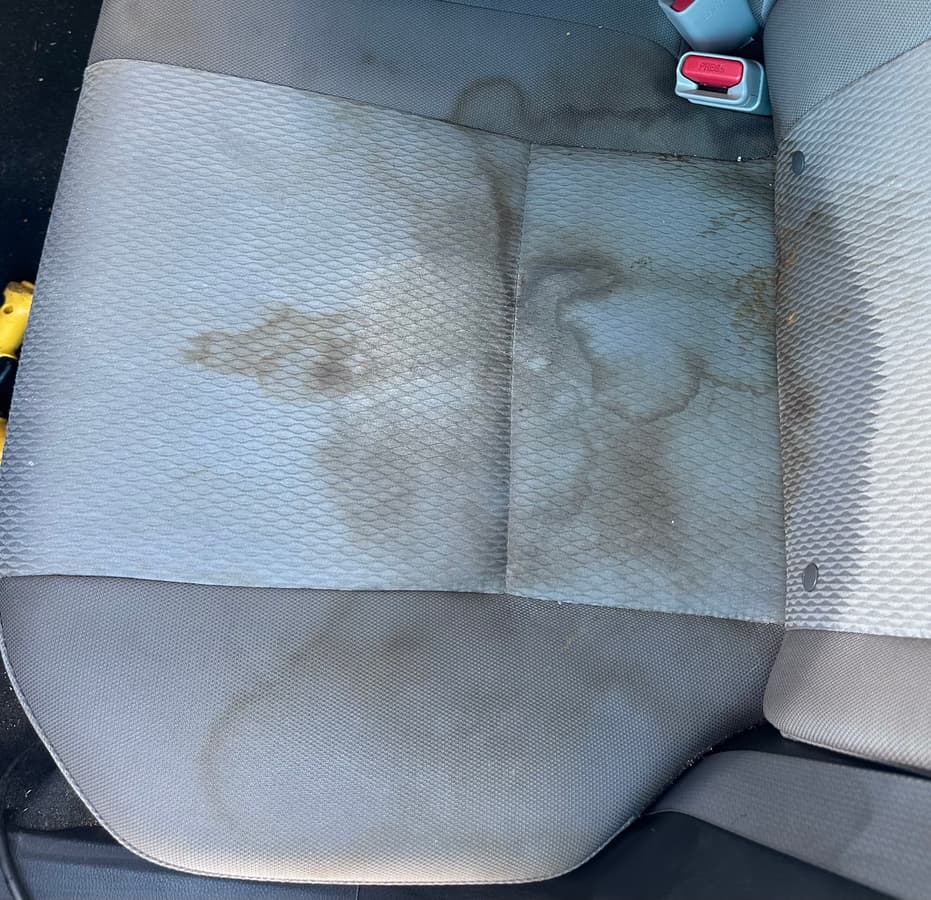
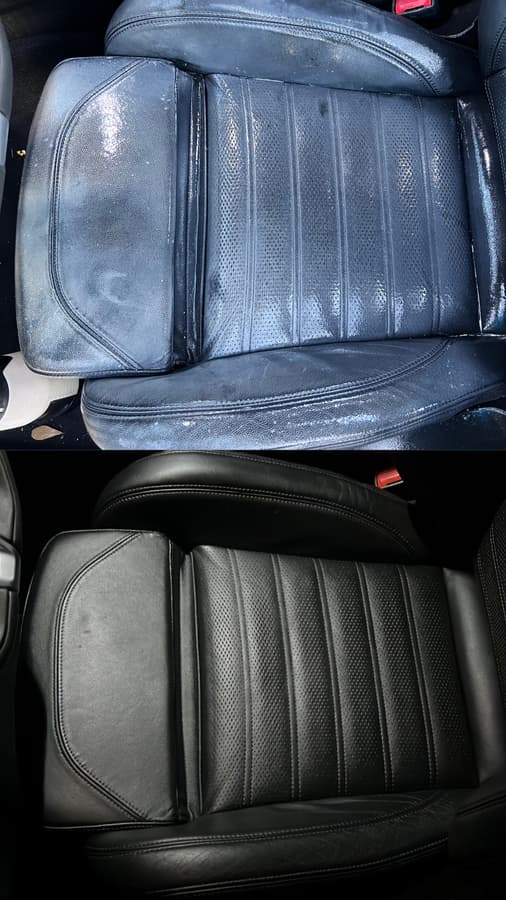
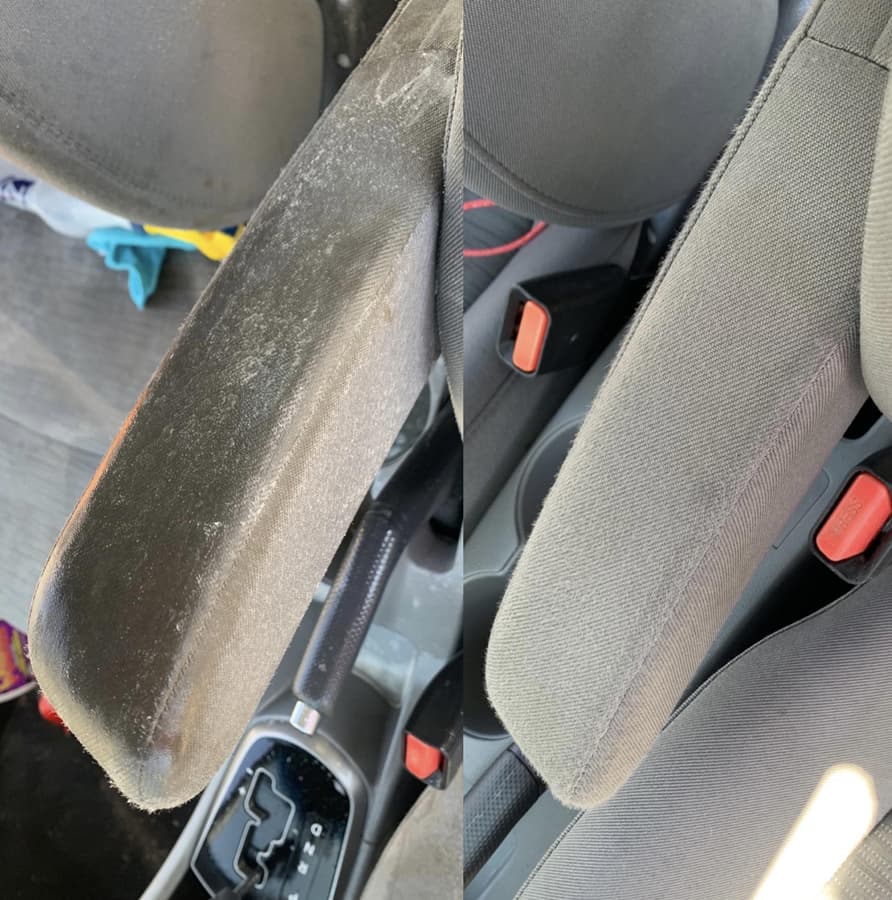
Deep carpet and upholstery extraction. Vacuuming pulls surface debris. Hot water extraction — the process professional detailers use — injects hot water into carpet and seat fibers under pressure and immediately extracts it along with the dissolved allergen-carrying material trapped in the weave. This includes pollen grains embedded in seat fabric, dust mite colonies in carpet, pet dander bonded to upholstery, and mold spores in floor mat fibers. The extraction process reaches into the foam padding under carpet, not just the surface layer.
The difference in allergen load between a vacuumed interior and a hot-water-extracted interior is significant. You can visually verify this yourself: the extraction water coming out of a car that has not been extracted in over a year is dark brown, even in a car that appears clean.
HEPA-grade vacuuming. Consumer vacuums often exhaust fine particles back into the air rather than capturing them. Professional detailing equipment uses filtration that retains fine particles rather than redistributing them.
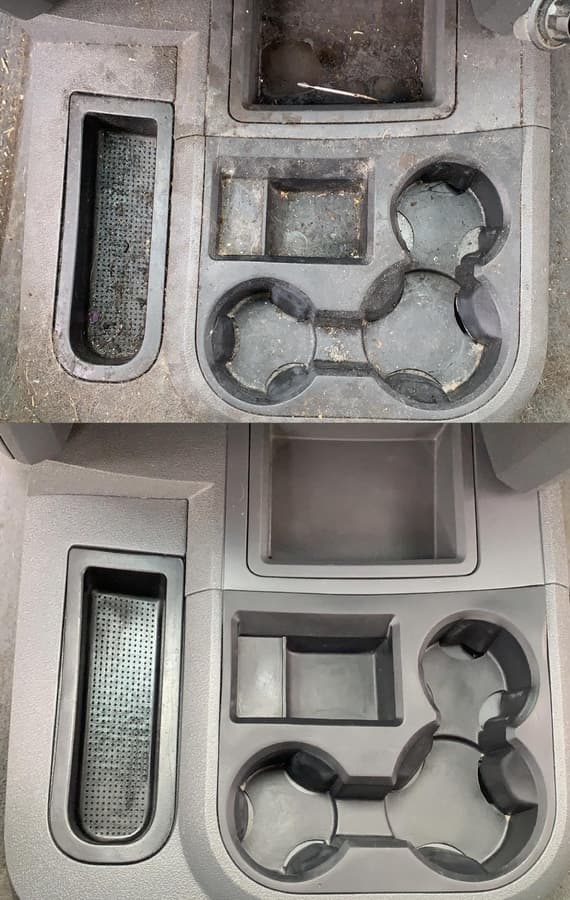
Hard surface sanitizing. Dashboard, door panels, center console, vents, and steering wheel accumulate pollen and dust that allergy sufferers touch repeatedly. A thorough professional wipedown of all hard surfaces with appropriate cleaners removes this contact-allergen layer. Vent slats — which collect and then disperse pollen each time the fan runs — are cleaned individually as part of a complete service.
Odor and biological treatment. Mold and mildew require enzyme-based or antimicrobial treatment, not just surface cleaning. If your car has any musty smell, there is active biological material present that is releasing spores. Our interior detailing service includes enzyme treatment on affected surfaces as part of allergen-reduction work.
The HVAC system: the most overlooked allergen source
Most allergy sufferers focus on visible surfaces — seats, carpet, floor mats. The HVAC system is the source they rarely think about.
Your car’s cabin air filter sits upstream of the evaporator coil and blower motor. When it becomes saturated — which happens faster during Houston pollen season — it passes allergens into the system rather than capturing them. The evaporator coil itself accumulates organic material over time and can develop bacterial and mold growth that the blower then distributes throughout the cabin every time the A/C runs.
Signs your HVAC system is contributing to your allergy symptoms:
- Symptoms worsen when the A/C or heat is running compared to when you drive with windows down
- A musty or sour smell from vents when the system first turns on
- Symptoms improve immediately after opening windows, suggesting the interior air is the trigger
Addressing the HVAC component requires cabin filter replacement and, if mold is present, professional evaporator cleaning. This is detailed in our guide on car A/C cleaning in Houston. For allergy-focused detailing, we treat both the visible interior and the air system together.
What a full allergen-reduction detail looks like
A professional detail with allergen reduction as the primary goal includes:
Cabin air filter inspection and replacement. New filter installed before interior work begins, so the cleaning process is not immediately undermined by a contaminated filter still in place.
Thorough vacuuming with HEPA filtration. Every fabric surface — seats, seatbacks, floor mats, cargo area, trunk liner, headliner — vacuumed systematically before wet work begins to remove the loose particulate layer first.
Hot water extraction on all fabric surfaces. Seats, floor mats, and carpet extracted at high temperature. This is the primary step for removing embedded pollen, dust mites, pet dander, and mold spores from fabric and padding.
Hard surface complete wipedown. Dashboard, door panels, console, steering wheel, and all hard surfaces cleaned and protected. Vent slats cleaned of accumulated pollen.
Door jambs and weather seals. Pollen accumulates heavily in door jambs and around weather seals. These areas are cleaned as part of a thorough service.
Enzyme treatment on any mold/mildew areas. If biological odor sources are identified, enzyme cleaners are applied and allowed to dwell before extraction.
Window cleaning, interior. Interior glass cleaned, including the top portion of windows where pollen accumulates and is blown inward when windows are cracked.
How often to detail for allergy management in Houston
During peak pollen season (February through May): Monthly extraction or a professional detail at the start and end of peak season, with cabin filter replacement at minimum annually — ideally twice yearly at the start of fall and spring allergy seasons.
Year-round maintenance: Every 3 to 4 months for a vehicle used daily in Houston is a realistic maintenance interval. Between professional services, keeping windows fully closed on high-pollen days and replacing cabin filters on schedule is the most effective mitigation strategy.
After a major pollen event: Houston occasionally has days where pollen counts are so high that cars parked outside develop a visible yellow-green coating. After a 2 to 3 day high-pollen event with outdoor parking, a targeted cleaning — at minimum vacuuming and hard surface wipedown — within the following week is worthwhile.
If symptoms are currently problematic: A same-week deep extraction is likely to provide noticeable relief if your car has not been professionally cleaned in more than 3 to 4 months. The load reduction from a single hot water extraction on a well-loaded interior is substantial.
Houston neighborhoods with highest outdoor pollen exposure
Outdoor pollen loads are relatively uniform across the Houston metro, but tree canopy density affects local pollen concentration. Areas with heavy oak and pine canopy — Memorial area, River Oaks, The Heights, West University, and wooded suburban areas in The Woodlands and Tomball — see higher per-vehicle pollen loads on parked cars during peak season.
Proximity to the ship channel and industrial areas adds an elevated PM2.5 load that compounds allergen symptoms for affected residents in the east side and Pasadena areas.
What does allergy-focused detailing cost?
Our Essential Detail starts at $200 to $300 depending on vehicle size and includes full interior hot water extraction, hard surface cleaning, and cabin air filter inspection. Cabin filter replacement, if needed, is handled as an add-on with parts cost depending on your vehicle.
For vehicles with significant allergen buildup — heavy pollen season exposure, pet hair plus allergy concerns, HVAC mold present — a combined interior and HVAC treatment gets the full system cleaned rather than just the visible surfaces.
The Transformation package includes complete interior and exterior restoration and is appropriate for vehicles with long-deferred maintenance across every surface.
Get a quote for your vehicle and situation through our online form or call us directly at (832) 938-2700.
CarPlay Mobile Detail provides mobile detailing across Houston and surrounding areas including Katy, Sugar Land, The Woodlands, Pearland, Cypress, Spring, Tomball, and more. View all service areas.