If you’ve spent any time researching paint protection for your car, you’ve run into three products: car wax, paint sealant, and ceramic coating. They all claim to protect your paint and make your car look better. They all get applied after a wash or a detail. And they all cost very different amounts.
In most parts of the country, the differences between them are mostly about convenience and longevity. In Houston, the differences are much more significant — because Houston’s climate doesn’t give any of them a fair fight.
Here’s an honest comparison of all three, what they actually do under Houston conditions, and which one makes sense for your situation.
The core difference: what each product is
Before comparing performance, it helps to understand what you’re actually applying.
Car wax is a natural or blended product — traditionally carnauba wax from Brazilian palm trees, sometimes blended with synthetic polymers. It fills surface imperfections, creates a warm gloss, and leaves a thin sacrificial layer over your paint. It has been around for over a century and remains the baseline paint protection standard.
Paint sealant is fully synthetic — a polymer-based product designed to chemically bond to your paint surface rather than sit on top of it. It generally lasts longer than carnauba wax, produces a sharper (some say colder) gloss, and is less affected by heat. Many enthusiasts use both: sealant as a base layer, wax on top for appearance.
Ceramic coating (also called nano-ceramic coating or SiO₂ coating) is a liquid polymer that bonds chemically to your paint at the molecular level and cures into a rigid, glass-like protective layer. Once cured, it becomes part of the surface — it does not wash off, does not degrade from UV exposure the way wax and sealant do, and produces extreme hydrophobic (water-repelling) properties. It’s a fundamentally different category of product.
How Houston changes the math
Houston’s climate is among the most demanding in North America for automotive paint:
- UV index 8–10 from March through October — among the highest in the continental US
- 204 sunny days per year — more than Miami, more than Phoenix’s winter months
- Surface temperatures 160–180°F on a sunny summer day — hot enough to cook an egg on a car hood, and easily hot enough to break down wax within weeks
- 90%+ relative humidity for much of the year — creating conditions where water, heat, and UV hit simultaneously
- Petrochemical corridor pollution — airborne industrial fallout that bonds to paint surfaces
- Frequent rain — Houston averages 50+ inches annually, and hard water mineral deposits are common
Under these conditions, conventional wisdom about how long paint protection products last — advice written for temperate climates — simply doesn’t apply.
Car wax in Houston: the honest assessment
In mild climates, a good carnauba wax job lasts 3–4 months. In Houston, expect 4–8 weeks during summer. UV radiation breaks down the wax layer rapidly, and the repeated heat/cool cycles accelerate degradation. By the time your car has been through a Houston August, you’re likely looking at bare paint.
What wax does well:
- Creates warm, deep gloss that many purists still prefer aesthetically
- Easy to apply and remove by hand or with a machine polisher
- Inexpensive — a quality paste wax costs $20–$50
- Masks light swirl marks and oxidation temporarily (does not fix them)
- Good for show car prep or a finishing layer on top of a sealant
What wax doesn’t do:
- Lasting paint protection — it degrades too quickly under Houston UV
- Meaningful chemical resistance — bird droppings, tree sap, and road tar will still etch through it if left too long
- Self-cleaning properties — water does not bead and roll off with the force that sealant or ceramic coating produces
- Any protection against water spotting — mineral-heavy water deposits on wax and etches
Verdict for Houston: Acceptable for occasional detail-day finishing or show prep. Not a maintenance strategy. If your car sits outside, waxing it in June and calling it protected until September is wishful thinking.
Paint sealant in Houston: a real improvement
Synthetic polymer sealants perform significantly better than wax under Houston conditions. A quality sealant applied correctly will last 6–12 months in most climates — and in Houston, you can realistically expect 4–8 months before it needs reapplication, depending on how the car is stored.
What sealant does well:
- Much more UV resistant than natural wax — polymers hold up longer under direct sun
- Creates a harder, more chemically resistant layer
- Hydrophobic properties are stronger than wax — water beads more aggressively
- Works well as a base layer under wax for a combined protection + appearance system
- Can be applied by machine or by hand in similar ways to wax
- Mid-range cost — a quality sealant costs $30–$80
What sealant doesn’t do:
- The chemical bond is not as permanent as ceramic — it still breaks down over time
- Does not achieve the same hydrophobic intensity as a properly cured ceramic coating
- Still requires reapplication — plan for once or twice per year in Houston
- Does not add meaningful scratch resistance to the paint surface
Verdict for Houston: A solid choice for owners who want real protection without a significant upfront investment, and who don’t mind applying a fresh coat once or twice per year. Sealant is the floor of reasonable paint protection for a car that sits outside in Houston summer.
Ceramic coating in Houston: why the math changes
Ceramic coatings are the category of product that the other two cannot replicate. The core difference is permanence: a properly applied and cured ceramic coating bonds to the clear coat at a molecular level and creates a layer of protection that does not degrade from UV exposure, does not wash off, and does not need seasonal reapplication.
What ceramic coating does well:
- UV resistance: The SiO₂ layer reflects UV radiation rather than absorbing it. Under Houston’s UV index 8–10 conditions, a quality coating maintains effectiveness for 2–5 years depending on grade
- Hydrophobic intensity: Water contact angle on a fresh ceramic surface typically exceeds 100–110 degrees — water beads into spheres and rolls off under any movement, taking road contamination with it
- Chemical resistance: Bird droppings, tree sap, road tar, and industrial fallout sit on top of the coating rather than bonding to paint. The etching window before damage occurs is dramatically wider
- Scratch resistance: The coating adds a layer of hardness (rated 9H on pencil hardness scale in quality products) that provides genuine resistance to light scratches and swirl marks from washing
- Ease of maintenance: Because contaminants don’t bond easily to the surface, weekly maintenance becomes a rinse rather than a full wash. Quality detail shops report 60–70% reduction in wash time for ceramic-coated vehicles
- Long-term cost: Applied once every 2–5 years vs sealant reapplication twice per year — the cost comparison inverts over time
What ceramic coating doesn’t do:
- It does not repair existing paint defects — scratches, swirls, and oxidation must be corrected first via paint correction before the coating is applied
- It does not provide the thick physical protection of PPF — ceramic coating will not prevent rock chips
- It does not eliminate the need for washing — it makes washing easier, but a coated car still needs regular maintenance
- It is not DIY-friendly — bonding failure from improper surface prep produces hazing, high spots, or premature delamination that requires professional correction to fix
Cost: Professional ceramic coating installation in Houston ranges from $500–$1,500+ depending on the product grade, vehicle size, and whether a paint correction step is included. Multi-year or lifetime coating packages are available at the high end.
The 5-year cost comparison for a Houston car
Here’s how the math works out over five years for a car stored outside in Houston:
| Protection Type | Initial Cost | Reapplication Frequency | 5-Year Total |
|---|---|---|---|
| Carnauba Wax | $20–$50 product | 4× per year (Houston) | $400–$1,000+ (labor if pro applied) |
| Paint Sealant | $30–$80 product | 1–2× per year | $150–$800+ (labor if pro applied) |
| Ceramic Coating (entry-level) | $500–$800 installed | Once per 2 years | $750–$1,600 |
| Ceramic Coating (premium, 5yr) | $1,000–$1,500 installed | Once in 5 years | $1,000–$1,500 |
For a car stored outside in Houston summer, professional wax application every 3 months (quarterly) runs $150–$400 per application at a quality shop. That’s $600–$1,600 per year — for a product that provides significantly less protection than a one-time ceramic coating installation.
The economics of ceramic coating become even stronger when you account for paint correction: if you’re having wax or sealant applied professionally over unaddressed swirl marks, you’re spending money protecting damaged paint rather than restoring it. A one-time investment in paint correction + ceramic coating addresses both issues together.
How to choose based on your situation
Choose wax if:
- You’re detailing for a show or special occasion and want maximum visual warmth
- You already have a sealant or coating base layer and want to top it with gloss
- You’re applying it yourself at home between professional details
- You’re not looking for long-term paint protection — just a finishing step
Choose sealant if:
- Your budget is limited and you want genuine improvement over wax
- You’re willing to reapply once or twice per year
- You’re not storing the car outside year-round in Houston
- You’re building a protection system (sealant base + wax top coat)
Choose ceramic coating if:
- Your car is parked outside in Houston regularly
- You want real UV protection that doesn’t require quarterly reapplication
- You want significantly easier maintenance — less time washing, less contamination buildup
- You plan to keep the car for 2+ more years
- You want to protect a paint correction investment (corrected paint + coating = the right sequence)
- You have a newer, luxury, or high-value vehicle where protecting the paint’s condition matters for resale
What the professional detail process looks like
If you’re considering ceramic coating, the installation process matters as much as the product itself. Poor prep produces poor results — hazing, high spots, and early delamination are all symptoms of improper surface preparation.
At CarPlay Mobile Detail, ceramic coating installation follows this sequence:
- Thorough decontamination wash — removes all surface contamination before any polishing
- Clay bar decontamination — lifts embedded industrial fallout, rail dust, and road tar
- Paint thickness measurement — gauges clear coat depth before any correction work
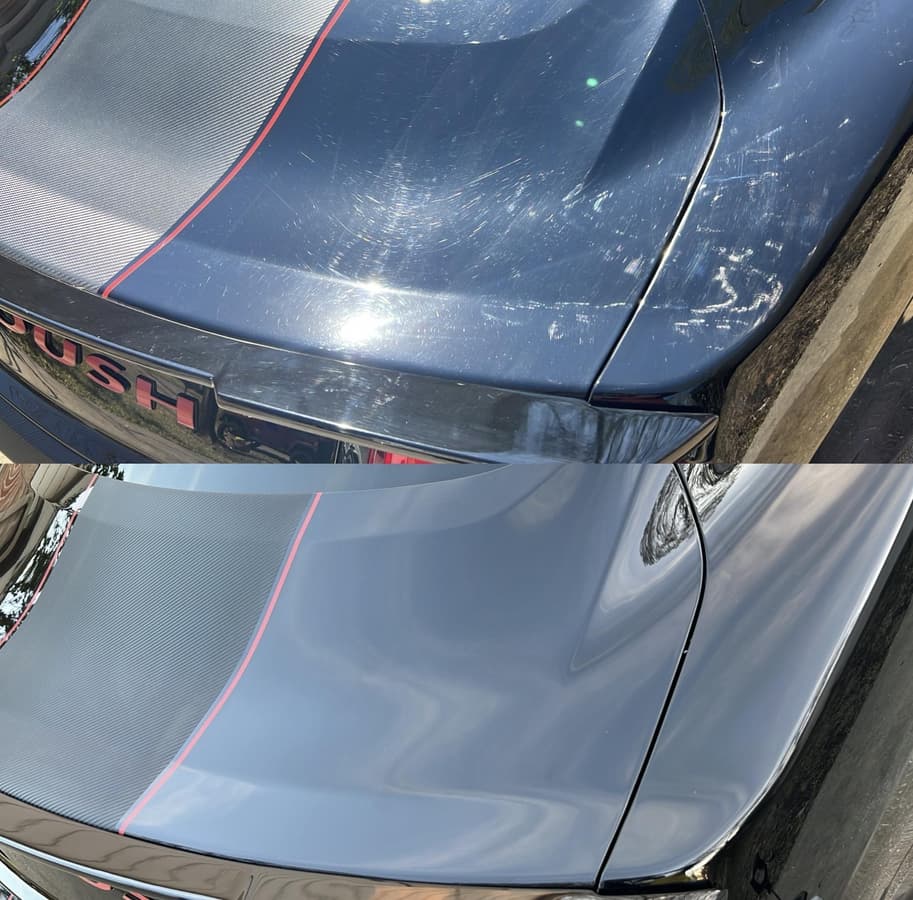
- Paint correction (if needed) — compound and polish stages to remove swirl marks, scratches, and oxidation. The coating seals whatever surface condition exists — correct first
- IPA panel wipe — removes all polish oils and prep for bonding
- Coating application in panels — applied by section, leveled immediately before cure begins
- Cure window — 24 hours before water contact, 7 days for full cure. No washing, no rain exposure during cure
The result is a surface that protects itself — and makes every future wash faster and more effective.
The bottom line for Houston drivers
Wax and sealant are both legitimate products with appropriate use cases. In Houston’s climate specifically, neither provides the durability that a car parked outside actually needs. Reapplying sealant twice a year is a reasonable maintenance strategy. Reapplying wax four times a year to protect a car that spends 204 days in direct sun is a significant ongoing cost for a product that degrades in weeks.
Ceramic coating’s upfront investment looks large until you compare it to the cost of ongoing wax and sealant applications — and until you factor in what UV damage to unprotected paint actually costs in paint correction or respray down the line.
For most Houston owners keeping a car for 3+ years, ceramic coating pays for itself — and eliminates the quarterly maintenance cycle that wax-based protection requires.
Ready to protect your paint properly? Book a ceramic coating consultation → or get a quick quote → for your vehicle. We service Houston, Katy, Sugar Land, The Woodlands, and all surrounding areas — mobile, at your location.
Related: PPF vs Ceramic Coating in Houston · How to Maintain Your Car Detail Results · Paint Oxidation in Houston: How to Fix It · Paint Correction in Houston