If you’ve ever reached into your car after it’s been sitting in a Houston parking lot, you already understand why window tinting is nearly universal here. Dashboard temperatures hit 160–185°F on a clear summer day. The steering wheel becomes untouchable. Leather seats leave burns on the backs of your legs.
Window tinting does three things that matter in this climate: it blocks heat before it enters the cabin, filters out the UV radiation that fades your interior, and reduces glare during Houston’s blinding afternoon sun. Done right, it makes your car meaningfully more comfortable and protects the investment you’ve made in the interior.
But window tinting has real complexity. Film type, VLT percentage, Texas legal limits, installation quality — all of it matters. This guide covers everything Houston drivers need to know.
What window tinting actually does
Window film works by reflecting or absorbing solar energy before it passes through the glass. Standard clear glass blocks almost no heat — it lets in visible light, UV radiation, and infrared heat essentially unimpeded. A quality window film intercepts a significant portion of that energy at the glass surface.
Three things matter in film performance:
VLT (Visible Light Transmission): The percentage of visible light the film allows through. A 35% VLT film lets in 35% of visible light — darker. A 70% VLT film lets in 70% — lighter and less visible from outside. Texas law sets minimum VLT requirements by window location (more on this below).
TSER (Total Solar Energy Rejection): The percentage of total solar energy the film blocks. This is the heat-rejection number. Higher TSER means a cooler cabin. Premium ceramic films achieve 50–65% TSER versus 35–45% for basic dyed films.
UV rejection: Most quality films block 99% of UV radiation regardless of VLT. This is what protects your dashboard, seats, and trim from fading and cracking. UV damage is irreversible — once leather dries and cracks, it’s a replacement, not a repair.
Texas window tint law: what’s actually legal in Houston
Texas has specific legal limits for window tint, and violations can result in inspection failures and equipment citations. The rules vary by window location:
Windshield: Only a non-reflective tint strip is allowed along the top, above the AS-1 line (typically the top 5 inches). No tint on the main driving area of the windshield.
Front side windows (driver and passenger): Must allow more than 25% VLT — meaning the film plus the glass combined must transmit at least 25% of visible light. Since factory glass typically transmits around 70–75%, this means a film with a VLT of roughly 35% or higher on front side windows will stay legal.
Rear side windows: Any darkness level is legal on rear side windows.
Rear window: Any darkness is legal as long as the vehicle has two outside rearview mirrors (which all modern vehicles have).
Reflectivity: Texas law also limits reflectivity — tint cannot be more than 25% reflective on front side windows, or 25% on rear side windows.
One important note: medical exemptions exist for specific conditions that require additional UV protection. If you have a documented medical need, you can apply for a variance that allows darker front window tinting.
The practical takeaway for most Houston drivers: 35% VLT on front windows gives you good privacy and decent heat rejection while staying comfortably legal. Many drivers go to 20% on rear windows for maximum comfort in the back seat.
The four main types of window film
Not all tint is equal. Houston’s heat makes film quality more important here than in cooler climates, because the films are under heavier solar load all year.
Dyed film
The entry-level option. A layer of dye absorbs some solar energy and reduces glare. It does not reject heat particularly well — TSER values typically sit around 30–40%. Dyed film fades and turns purple over 3–5 years as the dye breaks down under UV exposure. It’s the cheapest option and the most commonly regretted one.
In Houston, dyed film is noticeably inadequate in peak summer. You’ll still step into a very hot car.
Metalized film
Embeds tiny metallic particles that reflect solar energy. Better heat rejection than dyed film — TSER values around 40–50%. More durable than dyed film. However, the metallic particles can interfere with radio, GPS, and cell phone signals — a real issue in a city where navigation matters.
Carbon film
Uses carbon particles rather than metal. Better heat rejection than metalized film without the signal interference issues. TSER values around 40–55%. Stays dark without fading. A solid mid-range option for Houston.
Ceramic film
The premium tier. Uses ceramic nanoparticle technology to reject infrared heat without darkening the glass excessively. TSER values reach 55–65% — measurable difference in cabin temperature. No signal interference. UV rejection is 99%. The film looks factory-clean, especially on lighter VLT options.
Ceramic film costs 2–3x more than dyed film upfront, but it performs better in Houston’s climate, lasts longer (10+ years versus 3–5 for dyed), and doesn’t develop the purple cast. For a car you plan to keep, the lifetime cost advantage often favors ceramic.
How much does window tinting cost in Houston?
Pricing varies by film type, vehicle size, and installer. Rough ranges as of 2026:
| Film type | Sedan | SUV / Truck |
|---|---|---|
| Dyed film | $80–$150 | $120–$200 |
| Carbon film | $150–$250 | $200–$350 |
| Ceramic film | $300–$550 | $400–$700 |
These are estimates — high-end installers in Houston charge more, and there are budget shops below these ranges. As with most things, the variance in price reflects variance in quality. Bubbling, peeling edges, uneven application, and miscut corners are common issues with low-cost installations.
Window tinting is one service where you see the quality every time you get in the car. An installer who doesn’t take time with the edges and corners will frustrate you for years.
How long does window tint last in Houston?
Houston’s climate is harder on window film than most U.S. cities. The combination of intense UV, high heat, and seasonal humidity affects longevity.
- Dyed film: 3–5 years before fading and purpling
- Carbon film: 7–10 years with care
- Ceramic film: 10–15 years, often backed by lifetime manufacturer warranties from premium brands
The failure mode for most films in Houston is heat-driven adhesive degradation — the film begins to bubble or peel at the edges, particularly on rear windows that get the most direct afternoon sun. Quality films from brands like 3M, Llumar, or Suntek with proper installation hold up significantly better.
Tinting and your car’s interior: the connection to detailing
Here’s what most tinting guides don’t tell you: window film slows interior damage but doesn’t stop it. The UV that gets through (even 1% through a 99%-blocking film adds up over 10 years), combined with Houston’s heat, still works on unprotected surfaces.
Leather dries faster in Houston without conditioning. Plastic and vinyl dashboards develop micro-cracks from the temperature cycling — expansion to 185°F then cooling overnight, hundreds of times per year. Even with the best window film, a Houston vehicle interior needs proactive care.
What actually protects your interior long-term:
- Leather conditioning every 2–3 months to prevent drying and cracking under Houston heat
- Dashboard and vinyl protection with UV-blocking products during each detail
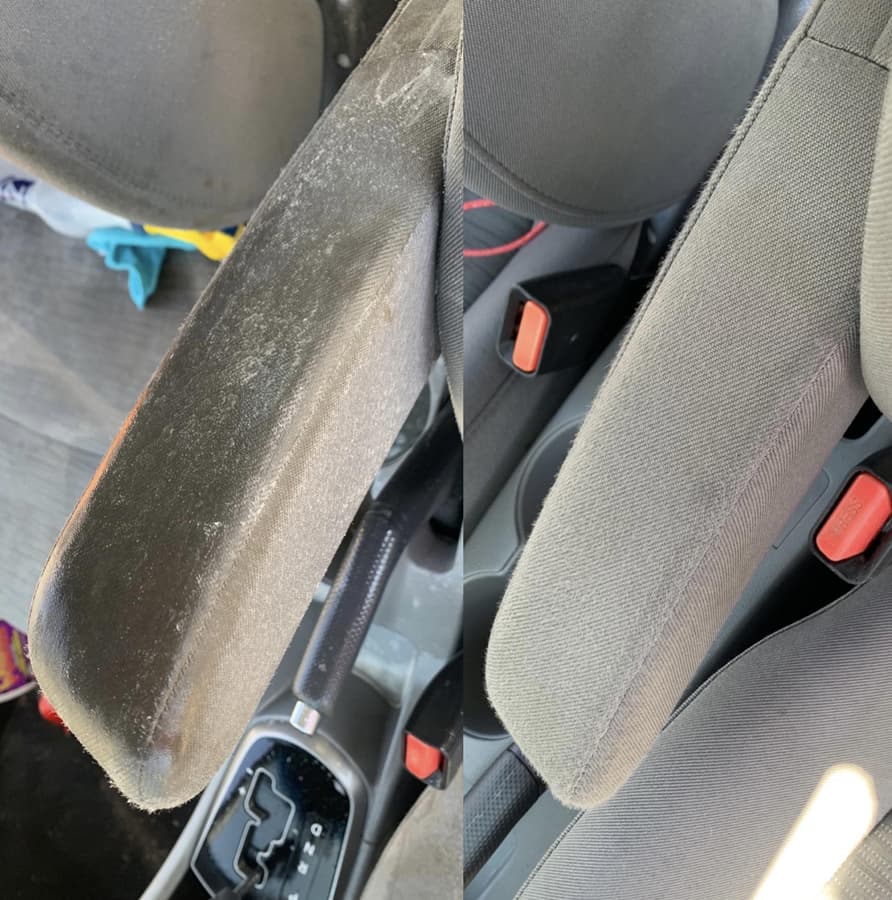
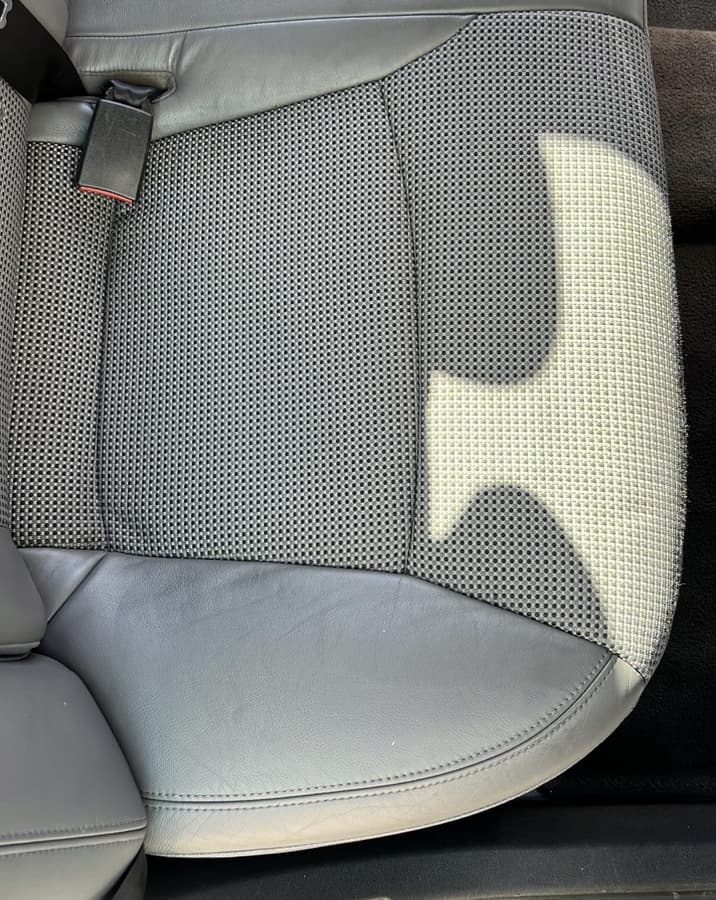
- Deep interior cleaning to remove the embedded pollen, dust, and oils that degrade materials from contact
- Periodic steam extraction to kill the mold and mildew that Houston humidity grows in carpet backing and foam
A full interior detail addresses all of these at once — cleaning and conditioning every surface so your protected investment stays protected.
The vehicles we see most often in poor interior condition despite having quality window tint are ones that were never detailed after the tint was installed. The tint bought time; neglect spent it.
What to look for in a Houston window tinting shop
A few things worth verifying before booking:
Film brand and warranty. Ask what brand of film they use. Reputable installers use named brands (3M, Llumar, Suntek, Johnson, Madico) and can show you manufacturer warranty documentation. Generic or white-label film is a red flag.
Installation environment. Tinting should be done in a clean, dust-controlled environment. Dust particles trapped under film create visible speckling. Ask if they have a dedicated tinting bay or room.
Edge-to-edge coverage. High-quality installations cut film to the edge of the glass (called “factory edge” or “edge-to-edge”). Visible black border around the edges — where the film doesn’t reach the rubber seal — is a sign of a cut corner.
Time allotted. Rushing a tint job means bubbles. A quality sedan installation takes 2–3 hours. An SUV takes 3–4 hours. If a shop promises a full vehicle in under 2 hours, expect problems.
Cure time. Fresh tint has a curing period (typically 3–7 days) during which it looks hazy and has small water bubbles that will disappear. A reputable installer explains this clearly. Rolling down windows during curing period damages the film — don’t do it for at least 3 days.
Window tinting + complete protection: the full picture
Window tinting protects the inside of your vehicle from heat and UV. Paint protection protects the outside from Houston’s UV, acid rain, industrial fallout, bird droppings, and tree sap.
The two are complementary — neither replaces the other. Drivers who invest in one and ignore the other are protecting half the vehicle.
For complete protection:
- Window film → blocks heat and UV entering the cabin
- Ceramic coating → permanently seals paint against UV oxidation, chemical etching, and contaminants
- Regular detailing → maintains the condition of both so neither degrades prematurely
Houston’s climate punishes vehicles that aren’t protected. The ones that hold their value and look good at 5–7 years are almost universally ones that received this kind of care from early on.
Ready to protect your complete vehicle?
CarPlay Mobile Detail handles the paint and interior side of the protection equation — ceramic coating, full exterior detailing, interior extraction, paint correction, and our complete Transformation package for vehicles that need top-to-bottom restoration.
If you’re getting your windows tinted, do it alongside a professional detail so your car is fully clean before the film goes on and everything is protected from the start. For maximum paint protection after tinting, consider pairing it with our ceramic coating service — it extends the life of the tint and protects your paint from Houston’s UV environment simultaneously.
Get a quote — we’ll come to you anywhere in Houston, Katy, Sugar Land, The Woodlands, Pearland, or the surrounding area.
Book a detail online or call us at (832) 938-2700 to schedule.