Houston is one of the largest Uber and Lyft markets in the country. With a sprawling metro area, limited public transit, and year-round demand for rides to the medical center, airport, bars, restaurants, and sporting events, rideshare drivers here put serious mileage on their vehicles — and on their interiors.
For most rideshare drivers, cleanliness is not a preference. It is a business metric. Passengers leave star ratings, and a single 1-star or 2-star review for a dirty or bad-smelling car can drag a driver’s score below the threshold that triggers deactivation warnings. Professional car detailing is not maintenance for rideshare drivers — it is a core operating expense that directly affects earning potential.
This guide covers what matters most to rideshare passengers, how Houston’s climate makes interior cleanliness harder to maintain, and how often professional detailing makes sense for drivers at different volume levels.
Why your rating depends on your car’s cleanliness
Passengers rate on two things more than anything else: the driving experience and the vehicle condition. Since most drivers are competent and safe, vehicle condition becomes the differentiator that separates 5-star trips from 4-star ones.
The specific complaints that lower ratings most:
Odor. This is the number-one reason rideshare passengers leave negative interior reviews. Stale food smell, cigarette smoke, body odor, or even a strong air freshener masking something worse — passengers notice within the first five seconds of getting in the car. Houston’s heat makes this worse. An interior that smells fine in February can become noticeably unpleasant in July when temperatures spike.
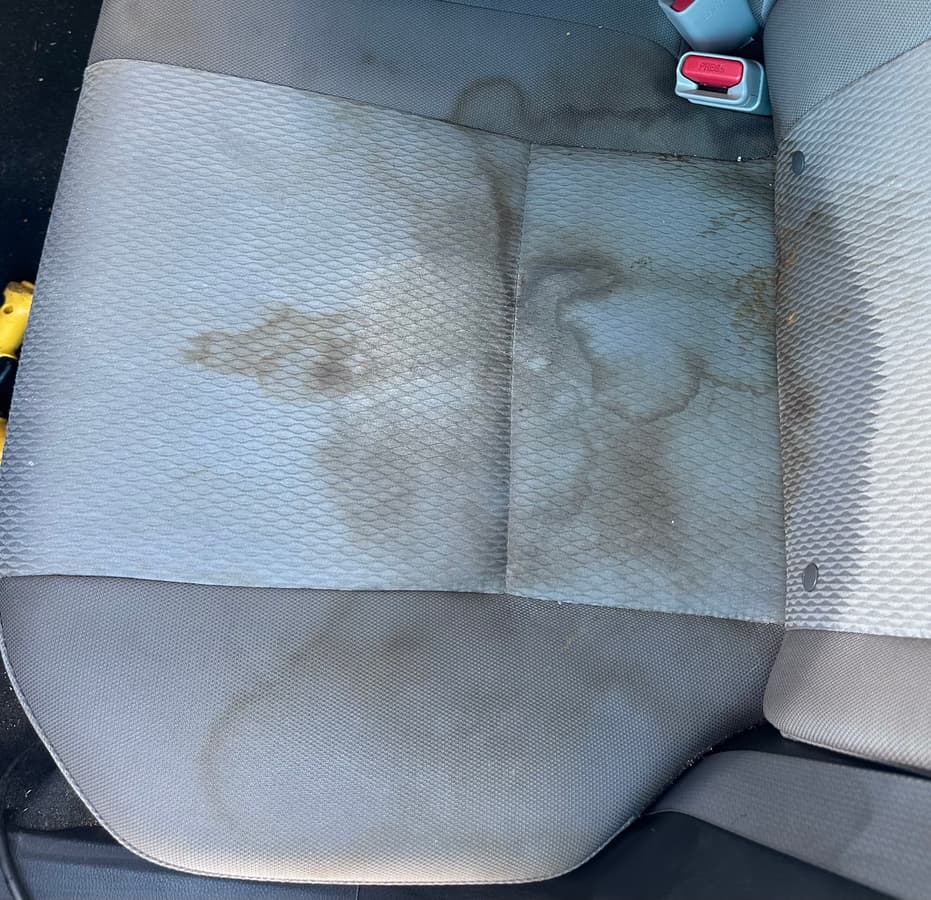
Stained or dirty seats. Passengers sit on your seats — they notice stains, pet hair, crumbs, and grime up close in a way a passing glance from the driver’s seat misses entirely. A seat that looks acceptable from the front looks neglected from a sitting passenger’s perspective.
Dirty windows. Film buildup on interior glass is one of the most common complaints in rideshare reviews. Passengers look out the windows constantly. Haze, smear marks, and fingerprints from previous passengers are immediately visible and communicate neglect.
Trash and debris. Receipts in door pockets, bottles under seats, crumbs on the floor — passengers track these details. Even a single piece of litter from a previous ride creates the impression that the car is never cleaned.
A car that feels sticky or grimy. Cup holders, door handles, center console surfaces — passengers touch these. The tactile experience of a clean vs. a grimy interior is immediate and leaves a lasting impression on the rating.
What standard cleaning misses
Most rideshare drivers clean their cars regularly — a wipe here, a vacuum there, an air freshener that helps for a few days. The problem is that standard cleaning addresses surface-level issues without reaching the sources of degradation.
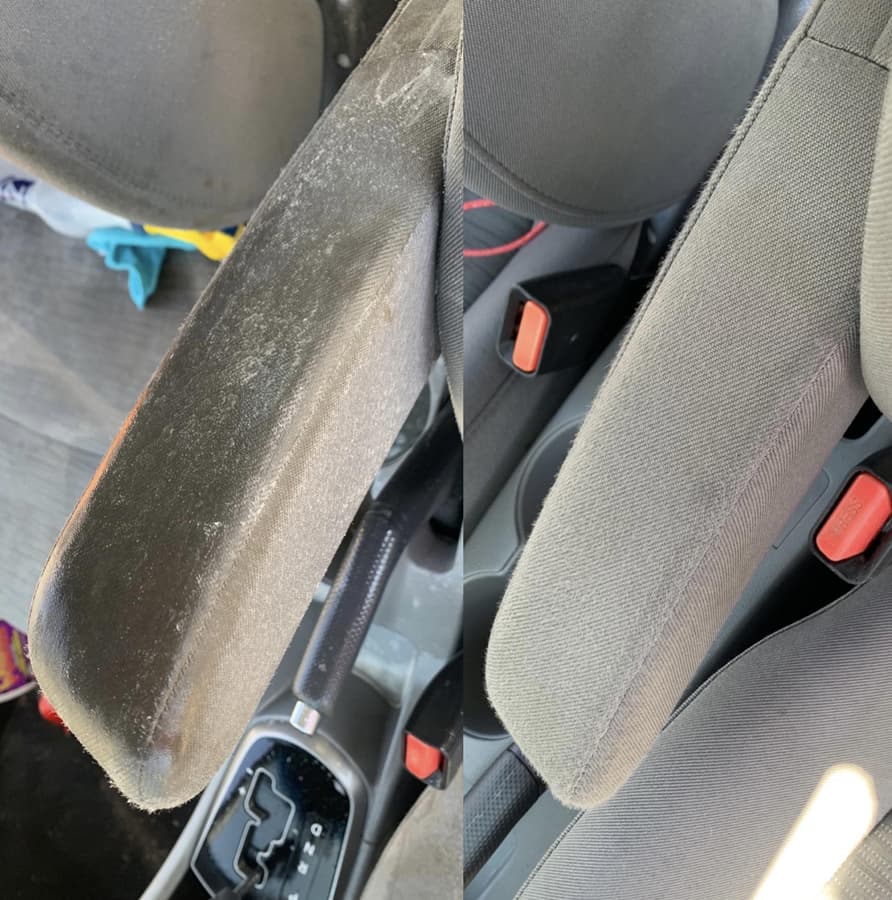
Odor compounds absorb into fabric seats, carpet, and foam padding. Spills that were wiped quickly still leave residue in the seat weave. Pet dander from a previous owner or from your own dog accumulates in places a vacuum cannot reach. Fingerprint oils build up on door handles and arm rests and become increasingly grimy over thousands of touch cycles.
Professional detailing addresses what cleaning misses: hot water extraction pulls contamination out of fabric at a fiber level, enzyme cleaners break down organic odor sources rather than covering them, glass cleaning removes interior film completely rather than smearing it, and full surface decontamination reaches every surface passengers contact.
A car that was cleaned yesterday can look clean but still smell and feel like a car that has had hundreds of passengers. A freshly detailed car communicates a different standard to every new rider.
Houston factors that make this harder
Houston’s climate creates specific challenges for rideshare interiors that drivers in other cities do not face at the same level.
Heat and humidity accelerate odor. A closed car parked in Houston sun can reach 160°F to 180°F interior temperature. This heat activates organic compounds from food, sweat, spills, and upholstery contamination. A car with marginal odor in the morning can become noticeably unpleasant by afternoon. Rideshare drivers picking up airport runs after sitting in the sun face this every day.
Monsoon-season footwell mud. Houston’s summer rain events are intense and localized. Passengers boarding with wet shoes leave mud, water, and organic material on carpet and floor mats that dry into embedded dirt. One rainy evening can deposit significant contamination that compounds with every subsequent ride.
Food and drink from every part of the city. Drivers picking up from Midtown bars, the Galleria, NRG Stadium events, or the Theater District regularly have passengers with food and open drinks. Spills happen. The variety of food types means a variety of stain and odor profiles accumulating over time.
Year-round demand. Unlike colder markets that have natural slow seasons, Houston rideshare demand is relatively constant year-round. There is no “off-season” when a driver’s car naturally gets a reset from lower use. The interior accumulates continuously without a natural break.
How often should rideshare drivers detail in Houston?
This depends primarily on your drive volume and the types of rides you take.
Part-time drivers (10 to 20 rides per week): A professional interior detail every 6 to 8 weeks keeps the car in presentation condition without over-spending. Between details, a quick wipe-down of contact surfaces after each shift and a HEPA vacuum of seats and carpet twice a week maintains the baseline.
Full-time drivers (30 to 50+ rides per week): Monthly professional detailing is the realistic cadence at this volume. At 40 rides a week, you are running 160 passenger cycles per month — that is a significant deposit of organic material, odor compounds, and surface contamination. Monthly detailing keeps the interior reset rather than progressively degrading.
Airport and premium ride drivers: If you operate in the UberXL, UberBlack, or premium tier, or if you regularly take airport runs (which tend to involve luggage scraping on trunk liners and prolonged rides where passengers are more attentive), monthly or even more frequent detailing is appropriate to maintain the presentation standard your tier requires.
After specific events: Do not wait for the scheduled cycle after a passenger gets sick in the car, spills a drink on the seat, or a large group of passengers boards with wet shoes and food. Same-week detailing after these events prevents permanent staining and odor establishment.
What a professional detail covers for rideshare vehicles
Our interior detailing service for rideshare drivers covers:
Deep vacuum — seats, floor mats, cargo area, seat rail tracks, door pockets, and all gaps where crumbs and debris accumulate between rides.
Hot water extraction — carpet and fabric seat shampooing that pulls contamination out at the fiber level rather than masking it. This is the treatment that resets fabric odor rather than managing it.
Enzyme odor treatment — all fabric surfaces treated with enzyme cleaners that break down organic odor compounds. If a passenger was ill or if there is chronic odor from food or sweat accumulation, this is the treatment that actually resolves it.
Hard surface sanitizing — dashboard, door panels, center console, cup holders, arm rests, door handles, gear shift, and steering wheel wiped down and sanitized. These are the surfaces your passengers touch every ride.
Complete window cleaning — interior glass cleaned streak-free with appropriate glass cleaner. This makes an immediate visual difference to passengers looking out the windows.
Door jambs — the entry and exit point for every passenger. Door jambs accumulate grime quickly on a rideshare vehicle and are often skipped in standard cleans.
Air treatment — enzyme treatment eliminates odor sources rather than masking them. A neutral, professional finish scent applied after the sources are removed.
The business math
At the rates Houston rideshare drivers earn, an Essential Detail at $200 to $300 pays for itself quickly if it prevents even a handful of rating impacts.
A driver with a 4.85 rating earns consistently and maintains access to surge areas and premium ride categories. A driver at 4.70 or below faces platform warnings and restricted access to higher-earning opportunities. The difference in monthly income between a 4.85 driver and one flagged for low ratings can be hundreds to thousands of dollars per month, depending on volume.
Professional detailing also reduces long-term vehicle depreciation. The interior of a car that gets professionally cleaned every six to eight weeks versus one that accumulates passenger contamination for a year will be in significantly better condition at trade-in — which directly affects the vehicle’s resale value when you upgrade.
For full-time drivers, a monthly detail at $200 to $300 is roughly $2,400 to $3,600 per year — a standard operating expense comparable to insurance or tires that most drivers simply build into their cost of business.
Mobile detailing fits the rideshare schedule
Traditional detailing shops require you to drop off your vehicle, arrange alternate transportation, and pick up on their schedule. For a rideshare driver, that means hours of potential earnings lost plus the logistics of getting around without your car.
CarPlay Mobile Detail comes to wherever your vehicle is parked — your home, your apartment complex, while you sleep after a night shift. The service happens without disrupting your schedule. You can book a detail for early morning before your first ride, or during the afternoon window when demand is low, and your car is ready for the evening surge without any coordination overhead.
For Houston drivers running airport shifts that start at 4 AM or bar-close runs that go until 3 AM, the ability to have a detail done at home while you rest before the next shift is a practical advantage that a shop-based service cannot offer.
Getting started
If you are a rideshare driver and have not detailed your car in the last two months, it is worth doing a reset before your next high-demand period — whether that is a Texans or Astros home game, a Beyoncé or country concert at NRG, Houston Rodeo season, or any weekend with high demand.
Get a custom quote online or call us at (832) 938-2700. We will assess what your interior needs and get it done at your location.
CarPlay Mobile Detail serves Houston rideshare drivers across the metro including Katy, Sugar Land, The Woodlands, Pearland, Cypress, Tomball, Spring, River Oaks, Galleria, and the Heights. View all service areas.