If you’ve ever sprayed an air freshener into your car and had the smell come back within days, you already know the truth: you can’t cover up a car odor in Houston — you have to destroy it at the source.
Houston’s heat and humidity make car odors worse than anywhere else in the country. A gym bag left on the backseat for a weekend in July can turn into a months-long problem. Spilled coffee that evaporated in the sun hasn’t gone away — it’s soaked into the foam, the carpet padding, and the seat tracks. Smoke from two years ago is still embedded in every porous surface in the cabin.
This guide explains exactly why odors come back, what Houston’s climate does to make them worse, and what professional odor elimination actually involves.
Why Odors Come Back in Houston
Most car odor “solutions” sold at AutoZone — sprays, hanging trees, ozone machines rented for $50 — treat the air, not the source. The moment temperatures climb back above 90°F (which in Houston is most of the year), those embedded molecules outgas again and the smell returns.
Here’s the science: odor-causing compounds like sulfur molecules from pet waste, carbonyl compounds from tobacco smoke, and volatile fatty acids from food spills bind to:
- Carpet fibers and the jute backing beneath them
- Seat foam — especially the first 2–3 inches beneath the surface
- Headliner fabric (which absorbs smoke and sweat over years)
- HVAC evaporator coil — mold grows here when AC condensation isn’t fully drained
- Door panel fabric and plastic trim
When your car heats up to 130–150°F inside (which happens in under 30 minutes on a Houston summer day), every one of these materials releases those molecules into the cabin air simultaneously.
A spray deodorizer coats the top of the carpet. The foam underneath keeps cooking.
Houston’s Climate Makes Everything Worse
High humidity accelerates mold and mildew. Houston averages 75% relative humidity year-round, with summer months regularly hitting 90%+. Moisture that gets into seats, carpet, or the trunk creates a permanent breeding ground for mold unless the source is removed and the material fully dried.
Heat bakes odors in. 130°F interior temps cross-link odor molecules with carpet and foam fibers more deeply over time. A spill that might air out in a cooler climate becomes permanently embedded after a few Houston summers.
AC systems grow mold. The evaporator coil in your HVAC system stays damp after every AC cycle. In Houston’s climate, mold and bacteria colonies grow on the coil and blow directly into the cabin through the vents. This is the source of the musty “sock smell” that hits when you first turn on the AC — and it doesn’t go away until the evaporator coil is treated.
The 5 Most Common Car Odors in Houston
1. Pet Odors
Dog and cat odors come from dander, urine, and saliva that embed in seat fabric and carpet. Urine in particular bonds to carpet backing and foam — and in humid conditions, bacteria continue breaking it down, releasing ammonia indefinitely. Enzyme-based treatments at the source are the only solution.
2. Smoke (Tobacco and Marijuana)
Smoke particles penetrate every porous surface in the cabin including headliner, sun visors, seat foam, A/C vents, and door panels. Light smokers can take multiple treatment sessions to fully remediate. The headliner is typically the hardest surface to clean because removing it risks tearing or delamination.
3. Mildew/Must (Wet Carpet)
Flooded floors, wet umbrellas, damp soccer cleats, and AC condensate leaks all contribute. Once mold establishes in carpet backing or under-seat foam, it spreads. The smell worsens dramatically in summer because heat speeds up mold metabolism.
4. Food and Beverage Spills
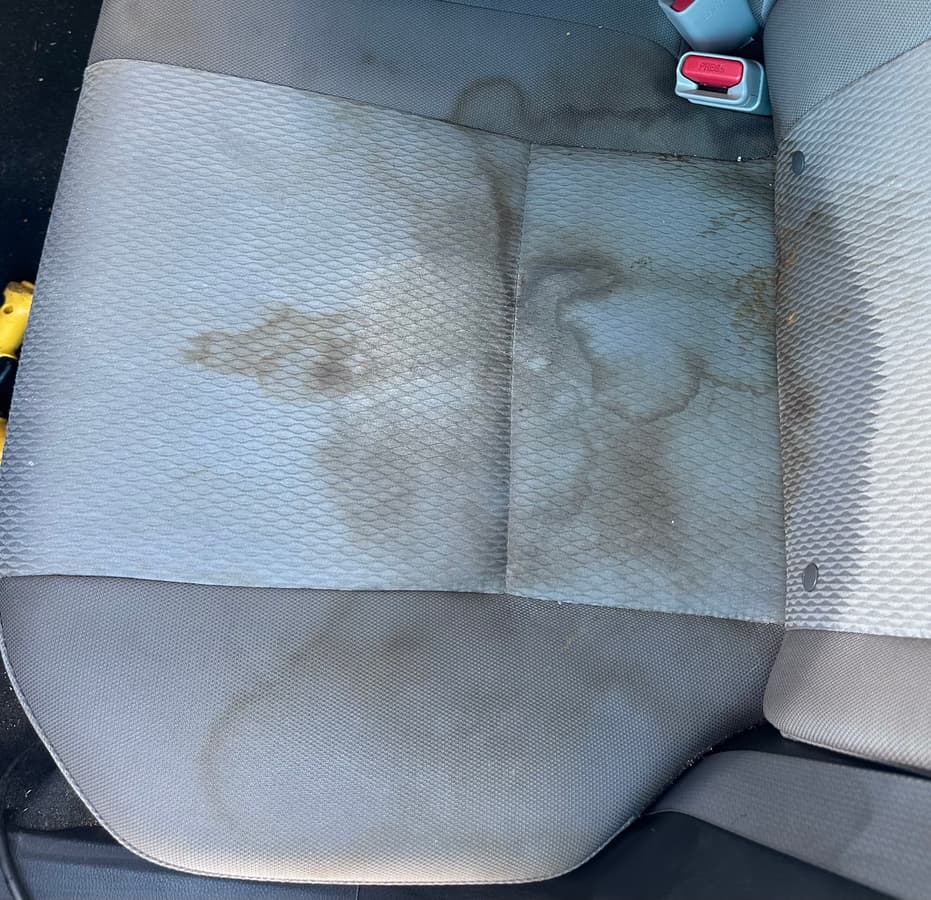
Fast food grease and sugary drinks are the most common. Grease molecules are lipophilic — they bind tightly to foam and don’t release with water alone. Sugar-based spills ferment in Houston heat, producing acetic acid (vinegar smell) and worse.
5. Musty AC Vent Odor
If your car smells fine until you run the AC, the problem is your evaporator coil. This requires a specific treatment — either an evaporator fogging spray inserted through the vent or a physical coil cleaning by pulling the dashboard panel.
What Professional Odor Elimination Actually Involves
At CarPlay Mobile Detail, odor removal is part of the Essential Detail and Transformation packages. Here’s what the process looks like:
Step 1: Source Identification
Every odor has an origin point. We inspect the carpet, seat foam, headliner, trunk, and HVAC intake before deciding on treatment method. A smoke car needs a different approach than a pet car or a flooded car.
Step 2: Deep Extraction
Hot water extraction at 210°F+ steam temperature lifts embedded molecules from carpet and seat foam — not just the surface but 3–4 inches deep where steam penetration breaks molecular bonds. This is the step most DIY attempts skip.
Step 3: Enzyme Treatment (for biological odors)
Pet urine, food, and any biological odor source gets treated with an enzyme-based solution that literally digests the odor molecules rather than masking them. The enzymes need dwell time — usually 20–30 minutes — to work properly.
Step 4: Hot Air Drying
Moisture left in seat foam is how mold starts. We use industrial air movers to fully dry treated areas before closing the vehicle. In Houston’s humidity, this step is non-negotiable.
Step 5: HVAC Fogging (when needed)
For musty AC smells, a biocide fog is sprayed directly into the HVAC intake while the fan runs on high. This coats the evaporator coil and ductwork with antimicrobial treatment that kills mold and bacteria at the source.
Step 6: Final Deodorization
After the source is eliminated, we apply a neutral-pH deodorizer to the entire interior — not to mask smells, but to reset the baseline. At this point, there’s nothing left to outgas.
DIY vs Professional Treatment: What Actually Works
| Method | Works On | Limitations |
|---|---|---|
| Air fresheners/sprays | Nothing — masks only | Fades in days, source remains |
| Baking soda | Light surface odors | Can’t reach foam or backing |
| Rented ozone machine | Surface air + some fabrics | Ozone doesn’t penetrate foam; damages rubber seals if misused |
| Steam cleaning at home | Surface-level carpet | Consumer units don’t reach extraction temp; no drying step |
| Professional extraction + enzyme | Deep-embedded biological odors | Most thorough — eliminates source |
| Professional + HVAC treatment | AC/vent musty smell | Required for evaporator mold |
The pattern is clear: anything that doesn’t reach the foam layer or the HVAC system will only provide temporary relief in Houston’s climate.
How Long Does It Take?
Most odor elimination services are completed as part of an interior detail:
- Essential Detail (4–6 hours): Includes hot water extraction, enzyme treatment for identified spills, and interior deodorization
- Transformation (full day): Includes everything above plus headliner cleaning, HVAC treatment, complete door panel wipedown, and a multi-pass extraction cycle for severe cases
For extreme cases — flood damage, years of heavy smoking, or active mold — a second session may be recommended after the initial treatment dries completely (usually 24–48 hours).
Before You Book: What to Tell Us
To speed up the odor elimination process, let us know:
- What type of smell (smoke, pet, mildew, food, musty AC, unknown)
- How long it’s been there (recent spill vs years-old issue)
- Vehicle type (SUV/truck upholstery takes longer than a sedan)
- Previous attempts (so we know what didn’t work)
The more context you give, the more targeted our treatment can be.
Service Areas
CarPlay Mobile Detail provides professional odor removal throughout Houston and surrounding areas including Katy, Sugar Land, The Woodlands, Pearland, Cypress, Spring, and Tomball. We come to your home or office — no driving to a shop required.
Ready to Finally Get Rid of That Smell?
If you’ve tried sprays, baking soda, and hanging trees and the odor keeps coming back — it’s because the source is still there. Professional odor elimination finds it, treats it, and eliminates it at the molecular level.
Get a free quote or book directly through our online booking system. CarPlay Mobile Detail comes to you anywhere in the Houston area.
Related reading: Interior Detailing in Houston · How Long Does Car Detailing Take? · How to Prepare Your Car for Detailing · SUV and Truck Detailing Guide